
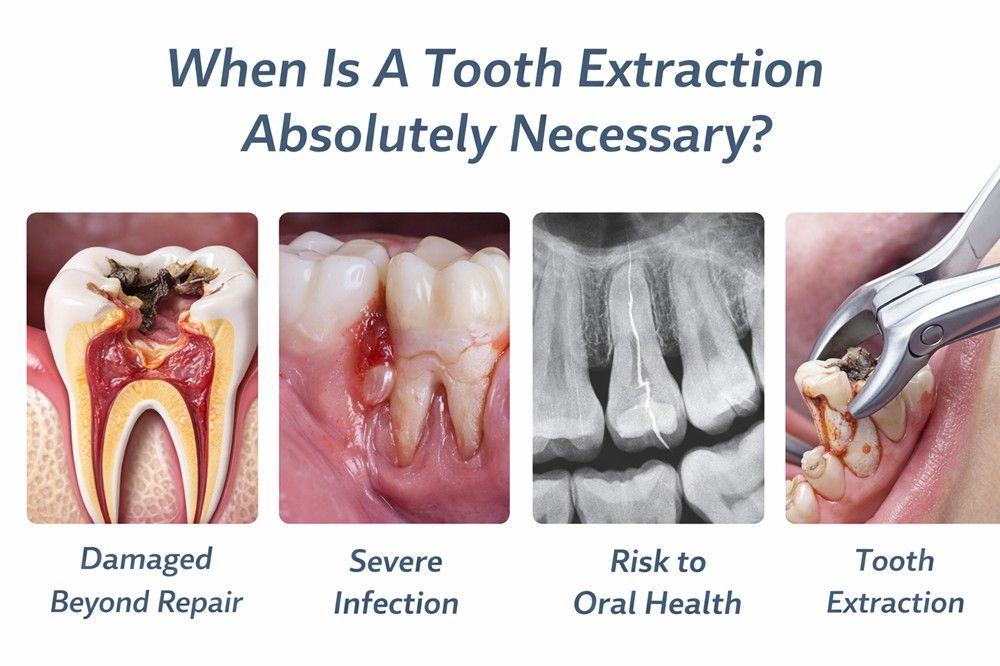
Modern dentistry focuses on saving natural teeth whenever possible. However, there are times when keeping a damaged or painful tooth can do more harm than good.
If you have severe pain or a serious dental injury, a tooth extraction may be needed to stop infection or prevent further damage.
Losing a tooth might feel like a stressful episode in life, but understanding that the tooth extraction is important will calm your nerves. In several dental problems, extraction is the basis for a comfortable and improved lifestyle.
How Does Severe Decay Lead To Tooth Removal?
When a cavity is left untreated, it eventually breaches the protective enamel and dentin layers, reaching the soft pulp at the center of the tooth.
If the damage is too extensive for a filling or even a root canal to fix, the tooth is considered “non-restorable.” At this stage, a dentist near you will likely recommend removal to stop the intense pain and prevent the decay from affecting neighbouring teeth.
- Structural Integrity – If more than 50% of the tooth structure is lost to decay, it may not support a crown.
- Internal Necrosis – When the blood supply to the tooth dies, it becomes a hub for bacterial growth.
- Recurrent Decay – Teeth that have failed multiple previous restorations are often better off being extracted.
Why Is Periodontal Disease A Major Cause Of Extraction?
Advanced gum disease, or periodontitis, is the leading cause of tooth loss in adults. This condition doesn’t attack the tooth itself but rather the bone and ligaments that support it.
If you are looking for a tooth extraction near you due to loose teeth, the cause is often a loss of foundational support.
When the jawbone recedes significantly, the tooth loses its anchor, making it impossible to chew and creating deep pockets where dangerous bacteria can thrive and enter the bloodstream.
When Do Wisdom Teeth Become A Clinical Problem?
Wisdom teeth, or third molars, are notorious for causing complications because the human jaw often lacks the space to accommodate them.
They become “impacted,” meaning they are stuck beneath the gum line or grow in at an angle that damages the surrounding molars.
- Crowding – Pushing against existing teeth and ruining orthodontic work.
- Pericoronitis – Chronic infection of the gum tissue surrounding a partially erupted tooth.
- Cyst Formation – Fluid-filled sacs that can damage the jawbone and tooth roots.
- Difficulty in Hygiene – Their position makes them nearly impossible to clean.
How Can Dental Trauma Necessitate Immediate Action?
Accidents during sports, falls, or car mishaps can result in fractured teeth. While many cracks can be repaired with bonding or crowns, a “vertical root fracture” is usually a terminal diagnosis for a tooth.
This occurs when a crack extends below the gum line and into the root. Because these cracks cannot be sealed, bacteria will constantly seep into the jawbone.
In these high-pressure situations, removing the broken fragments is essential to alleviate trauma and begin the process of restorative healing.
Is Extraction Used For Orthodontic Preparation?
Sometimes, a tooth is perfectly healthy but simply in the way. Orthodontists may recommend an extraction to create space in a severely overcrowded mouth.
By removing one or two teeth, the remaining teeth can be shifted into their proper alignment more effectively. This results in a more functional bite and an aesthetic smile that is easier to maintain over the long term.
What Are The Risks Of Avoiding A Necessary Extraction?
Choosing to leave a compromised tooth in your mouth can lead to systemic health issues.
A dental infection can quickly turn into a dental abscess, which is a pocket of pus that can spread to the jaw, neck, or even the brain.
- Sepsis – A life-threatening reaction to a spreading infection.
- Bone Loss – Chronic infection “eats” away at the jawbone, making future implants difficult.
- Sinus Issues – Upper tooth infections can migrate into the sinus cavities.
- Neighboring Damage – Bacteria from one bad tooth can cause cavities in the perfectly healthy teeth next to it.
Restoring Your Oral Health and Comfort
Deciding to have a tooth removed is never easy, but it is the best step towards a healthy life. Removing pain or infection caused by an infected tooth will help your body prepare for a healthy dental restoration.
Modern techniques make the process quick and comfortable so that you can eat and smile with confidence.
At Smile 64 Clayton Dental, our dentist in Surrey offers gentle care and explains your options, using advanced technology to keep your visit comfortable and efficient.
If you’re experiencing tooth pain or concerns, contact us today to schedule a consultation and take the next step toward a healthy smile.
FAQs
Does a tooth extraction hurt during the procedure?
With modern local anesthetics, the area is completely numbed; you will feel some pressure as the tooth is moved, but you should not feel any sharp pain.
How long does it take to recover after a tooth is pulled?
Most patients feel back to normal within 3 to 7 days, though it takes a few weeks for the gum tissue to fully close and several months for the bone to heal.
What is a “dry socket” and how do I prevent it?
A dry socket occurs when the blood clot dislodges; avoid it by not using straws, smoking, or spitting vigorously for 24 to 48 hours after the visit.
Will I need to replace the tooth right away?
Except for wisdom teeth, it is usually recommended to plan for an implant or bridge to prevent your other teeth from shifting out of place.